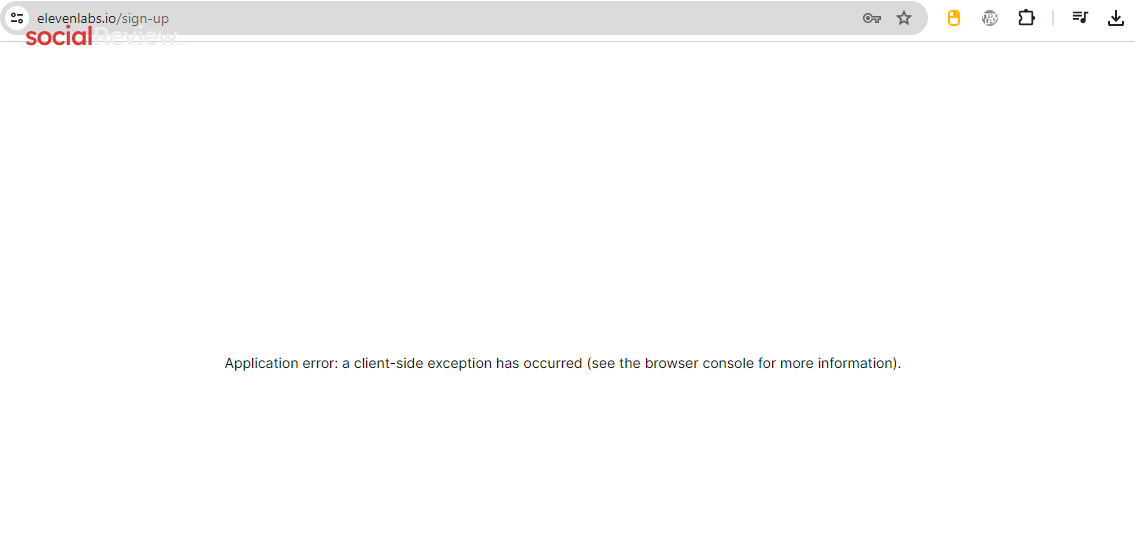
If you see the error message “Application error: A client-side exception has occurred” whereas attempting to open a web site in Google Chrome, it normally means the web site began loading, however the web page’s code crashed whereas working in your browser.
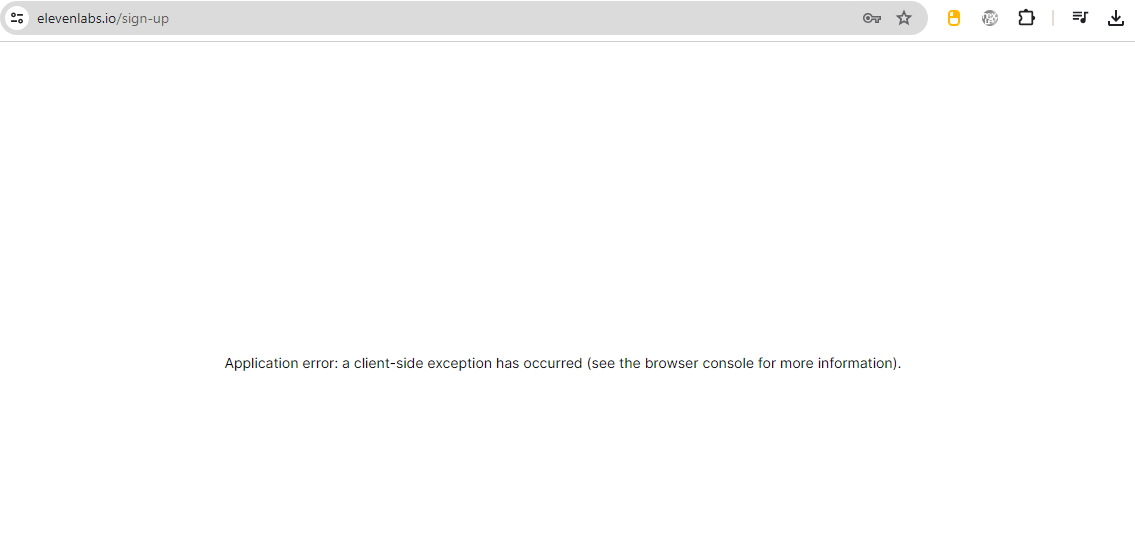
This error is mostly linked to corrupted cached website information, damaged cookies, conflicting extensions, an outdated Chrome model, or browser settings that intervene with how the web site’s JavaScript information load and run. In some instances, the problem is just not in your laptop in any respect and is brought on by defective, incomplete, or incompatible code on the web site itself.
Because this downside might be induced both by Chrome or by the web site itself, it’s best to begin with fast browser-side checks first after which affirm whether or not the problem solely occurs on that particular website.
1. Try the Website in Incognito Mode
Before altering any settings, check the web site in an Incognito window. Incognito begins Chrome with a recent short-term session and disables extensions by default except you’ve manually allowed them there. This makes it one of many quickest methods to examine whether or not the issue is being brought on by cached information, cookies, or an extension battle.
- Open Google Chrome.
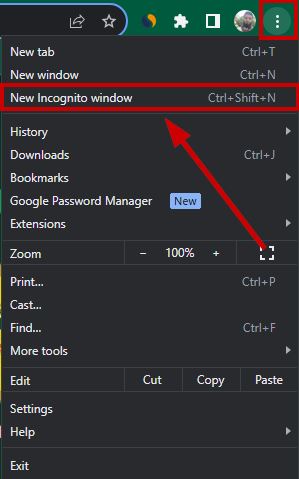
- Click the three-dot menu in the top-right nook.
- Select New Incognito window.
- Open the affected web site in the Incognito window.
- If the web site works there, the issue is probably associated to extensions, cookies, or cached browser information in your regular Chrome session.
2. Perform a Hard Refresh
Sometimes the web page fails as a result of Chrome is attempting to reuse outdated web site information that not match the present model of the positioning. A regular refresh should still reuse some cached sources, however a tough refresh forces Chrome to request recent copies of the web page information once more.
- Open the affected web site in Google Chrome.
- Press Ctrl + Shift + R in your keyboard.
- Alternatively, press Ctrl + F5 if supported in your system.
- Wait for the web page to reload fully.
- Check whether or not the error nonetheless seems.
3. Update Google Chrome
An outdated model of Chrome may cause compatibility issues with fashionable web sites, particularly when a website relies on newer JavaScript options, browser safety conduct, or rendering adjustments. Updating Chrome additionally refreshes essential browser parts that could be contributing to the issue.
- Open Google Chrome.
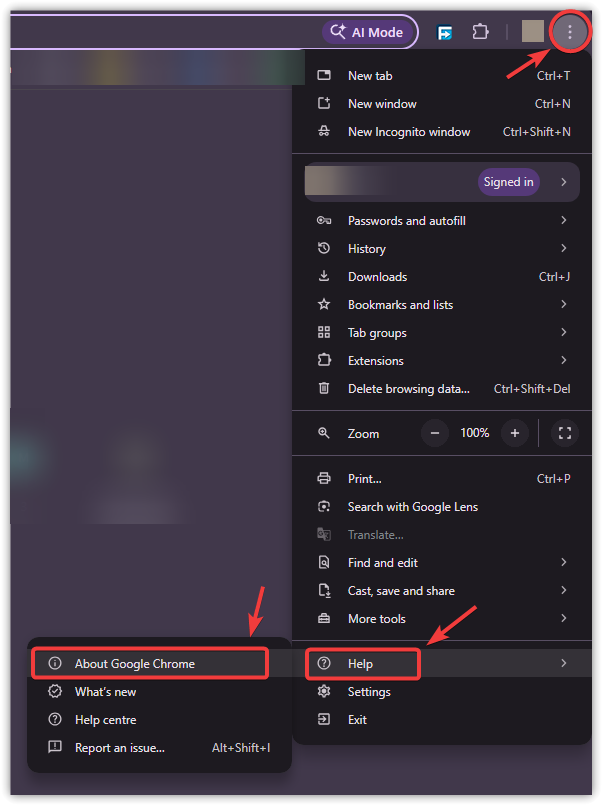
- Click the three-dot menu in the top-right nook.
- Select Help → About Google Chrome.
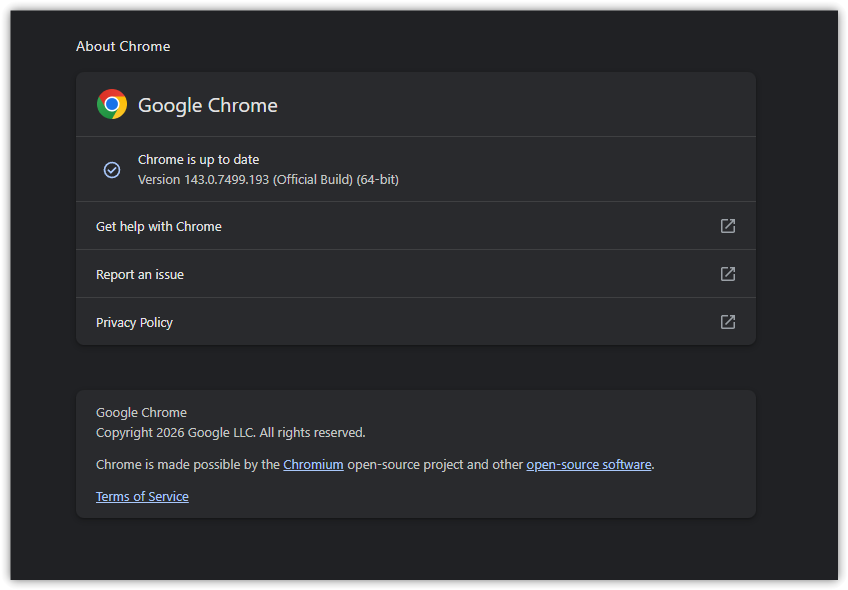
- Allow Chrome to examine for updates robotically.
- If an replace is accessible, let it set up.
- Restart Chrome after the replace finishes.
4. Clear Browsing Data
Chrome shops cached information, cookies, and different website information so pages can load sooner on future visits. However, if that saved information turns into corrupted or not matches the present model of the positioning, Chrome could hold reusing it and fail to load the web page appropriately. Clearing looking information forces Chrome to obtain recent web site information as a substitute of counting on broken or outdated native information.
- Open Google Chrome.
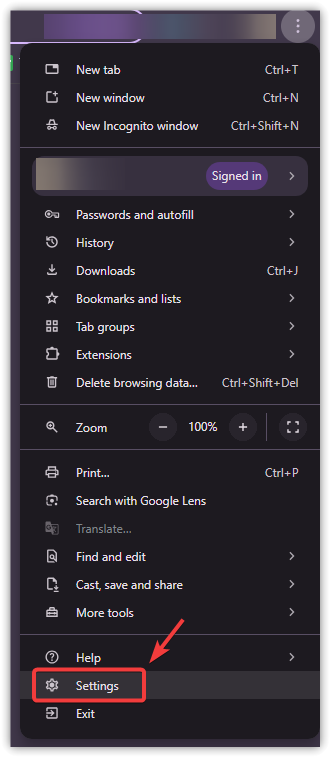
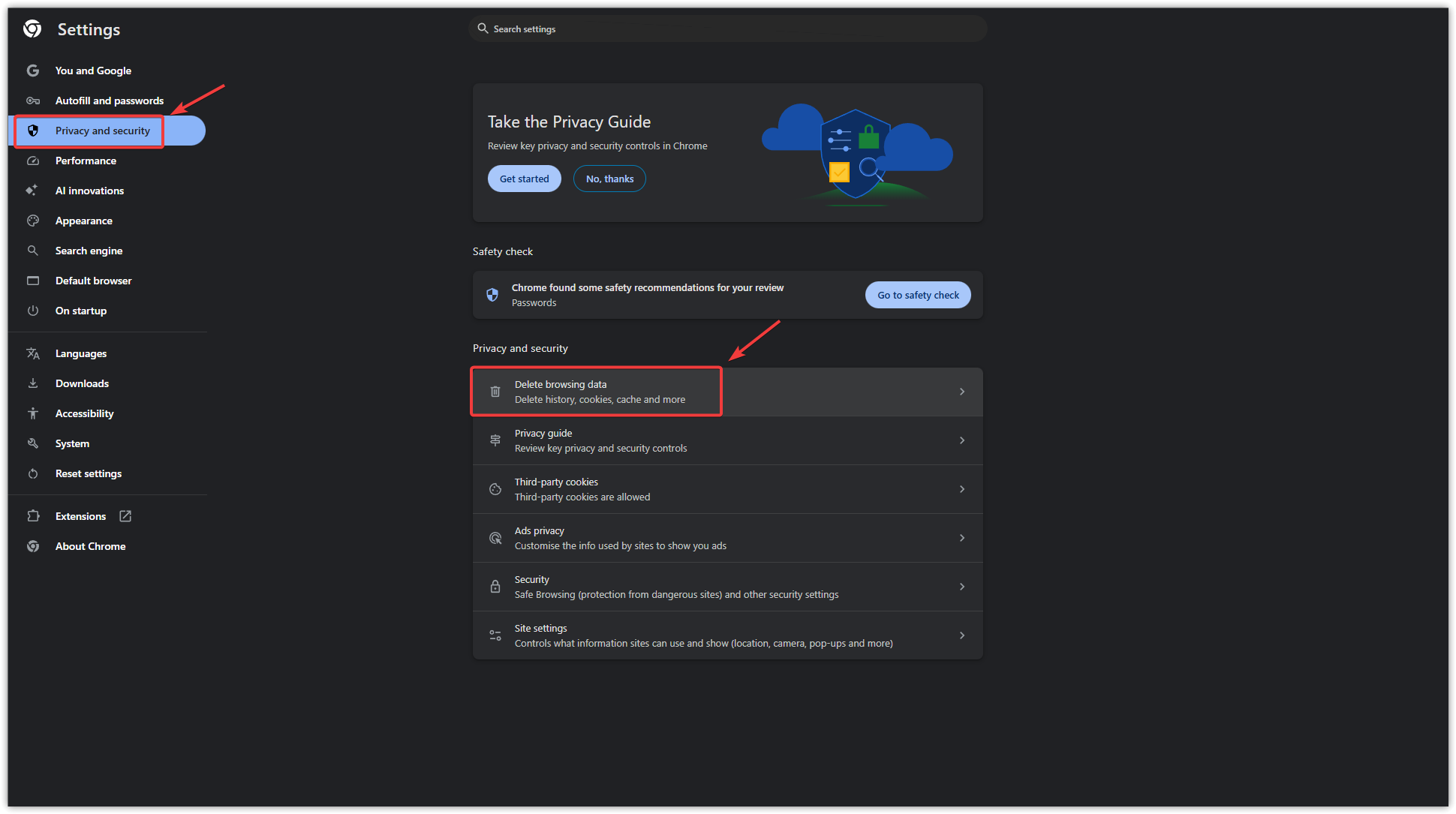
- Click the three-dot menu and choose Settings.
- Go to Privacy and safety.
- Click Clear looking information.
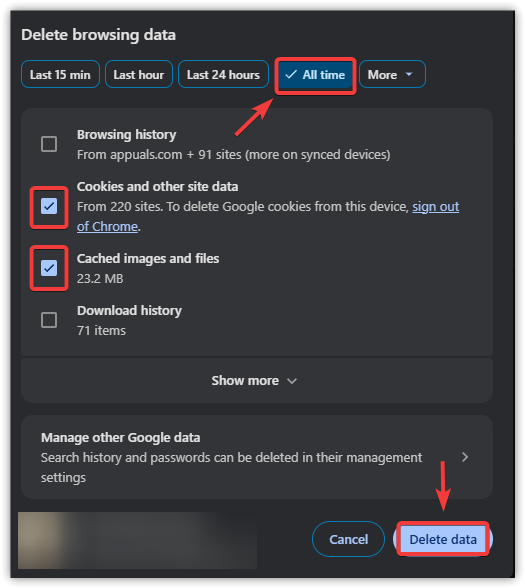
- Select All time because the time vary.
- Check Cached pictures and information and Cookies and different website information.
- Click Clear information.
Note: Clearing cookies will signal you out of many web sites, so ensure you know your login particulars earlier than persevering with.
5. Disable or Remove Problematic Extensions
Extensions that block content material, inject scripts, modify web page parts, or filter web site requests can intervene with how a website masses. Common examples embrace advert blockers, script blockers, privateness instruments, VPN extensions, and page-enhancement add-ons. If an extension adjustments the web page in a method the web site doesn’t anticipate, the positioning’s front-end code could fail and set off a client-side exception.
- Open Google Chrome.
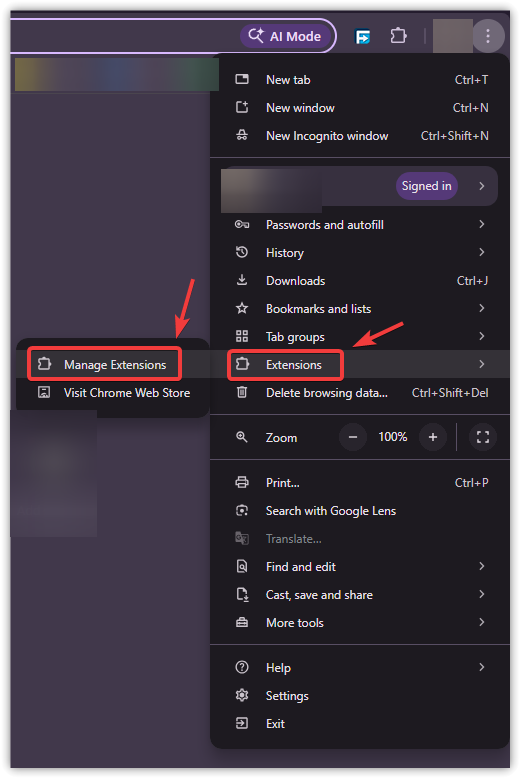
- Click the three-dot menu and go to Extensions → Manage extensions.
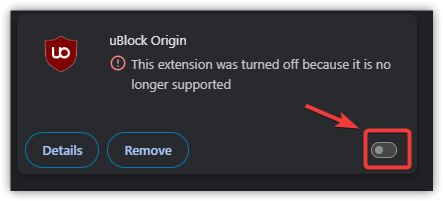
- Disable all extensions utilizing the toggle change.
- Reload the affected web site.
- If the error disappears, re-enable extensions one after the other till the issue returns.
- Remove, replace, or hold disabled the extension inflicting the problem.
6. Reset Google Chrome
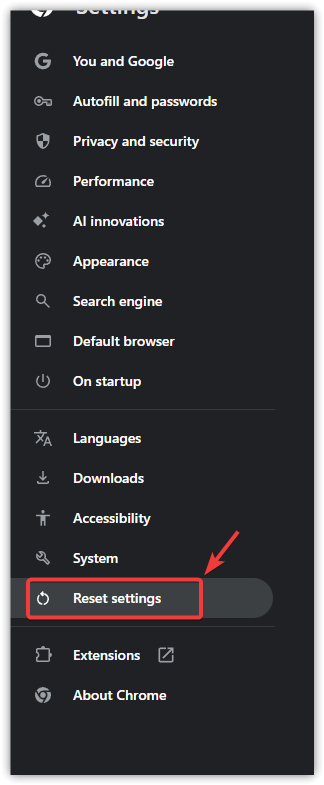
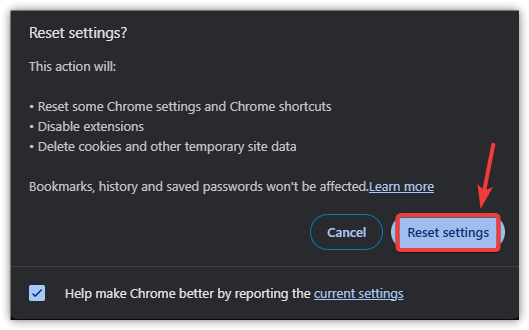
If the issue is being brought on by hidden browser misconfiguration, altered settings, or a mixture of profile and extension-related conflicts, resetting Chrome may also help. This restores Chrome’s fundamental settings to their default state and disables extensions, which makes it a helpful step when less complicated fixes don’t work. This doesn’t take away your bookmarks, historical past, or saved passwords, however it would reset startup settings, new tab settings, pinned tabs, and search engine preferences.
- Open Google Chrome.
- Go to Settings.
- Scroll down and click on Reset settings.
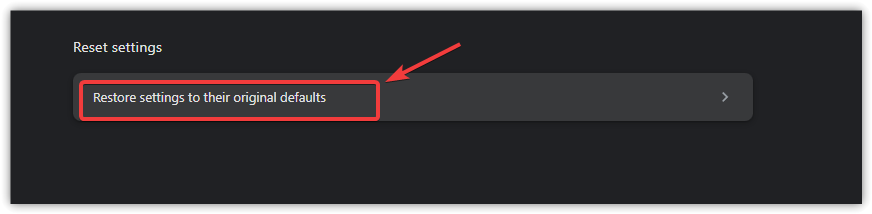
- Select Restore settings to their authentic defaults.
- Confirm by clicking Reset settings.
- Restart Chrome.
If not one of the browser-side fixes work and the web site retains failing solely on one particular web page or service, the problem is probably going tied to the web site itself. In that case, probably the most sensible possibility is to attend for the positioning proprietor to repair it or contact the web site’s help crew if one is accessible.